

GetSmarter Review 2026: Are the University Short Courses Worth It?
Quick answer: GetSmarter is legit. It runs online short courses for universities such as MIT, Oxford, Cambridge and Yale. Most last 6 to 10 weeks at 4 to 12 hours a week, and you get a digital certificate from the university when you finish. The courses we priced cost $1,139 to $3,850.
| Best for | Professionals who want a university-branded certificate in one focused skill (AI strategy, leadership, finance) and can keep to a weekly schedule |
| Not for | Anyone who needs an accredited qualification or academic credit, or wants to learn a skill cheaply |
| Price | $1,139 to $3,850 per course in our sample; 2 to 4 instalments on longer courses |
| Certificate | Digital, issued by the partner university; non-credit-bearing |
| Refund window | 21 days from the start date on courses of 4 weeks or more |
| Our verdict | Good value if your employer pays or the university name matters for your next role; expensive if you only want the knowledge |
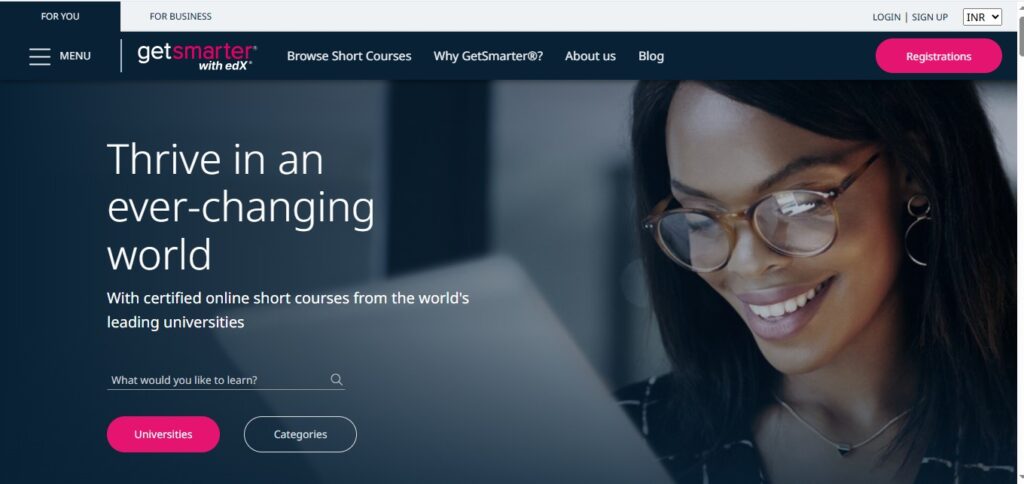
What is GetSmarter?
GetSmarter is an online learning platform that partners with renowned universities like Harvard, MIT, and Oxford to provide short-term courses. These programs, which run from 3 to 27 weeks (many take 6 to 8), are designed for working professionals seeking to enhance their skills without committing to long-term degrees.
Key Features of GetSmarter Courses
Feature | Details |
Course Duration | 3 to 27 weeks; many run 6 to 8 weeks |
Partner Universities | MIT, Harvard, Oxford, Cambridge, Yale, Stanford, LSE, University of Cape Town and others |
Learning Format | Online and cohort-based, with fixed start dates and a set number of hours per week |
Certification | Digital certificate issued by the partner university; not credit-bearing unless the course page says otherwise |
Support | Enrolment specialists for admin (during office hours) and a facilitation team of subject experts |
Pricing | The courses we checked cost $1,139 to $3,850; payment plans split this into 2 to 4 instalments |
What GetSmarter Courses Cost in 2026
GetSmarter doesn’t publish a price list, so these are the fees shown on four current course pages in September 2026:
| Course | University | Length | Hours per week | Fee |
|---|---|---|---|---|
| Management Essentials | University of Cape Town | 8 weeks | 4–6 | $1,139 |
| Communicating for Influence and Impact | University of Cambridge | 8 weeks | 8–10 | $3,148 |
| Executive Leadership Programme | University of Oxford (Saïd) | 8 weeks | 7–10 | $3,549 |
| AI: Implications for Business Strategy | MIT Sloan | 6 weeks | 6–8 | $3,850 |
Working from each course’s stated hours, that’s roughly $24–$36 per study hour for the UCT course, about $39 for Cambridge (which lists 80 learning hours), $44–$63 for Oxford and $80–$107 for MIT. The university name is a large part of the price. You can pay in full or spread the fee over 2 to 4 instalments, depending on how long the course runs.
Refunds, Cancellations and Deferrals
GetSmarter’s refund window depends on course length:
- Courses of three weeks or less: full refund if you cancel within 14 days; no postponements.
- Courses of four weeks or more: you can cancel or postpone up to 21 calendar days after the course start date.
Refunds are usually processed within seven working days. Because these courses cost $1,000 or more, check the specific course page before you pay; the terms apply per course.
What the Certificate Is, and What It Isn’t
When you complete a course, you get a digital certificate issued by the university that runs it, such as MIT, Oxford or Cambridge, usually 4 to 6 weeks after the course closes. You can add it to LinkedIn and your CV. Some courses also count toward professional development hours (CPD, CEU or PDU), which the course page will list.
What it isn’t: a degree or an accredited qualification. GetSmarter’s courses are non-credit-bearing unless the course page says otherwise, and they don’t carry academic credit toward a degree. If you need a formal qualification, look at a university’s degree or diploma programmes instead.
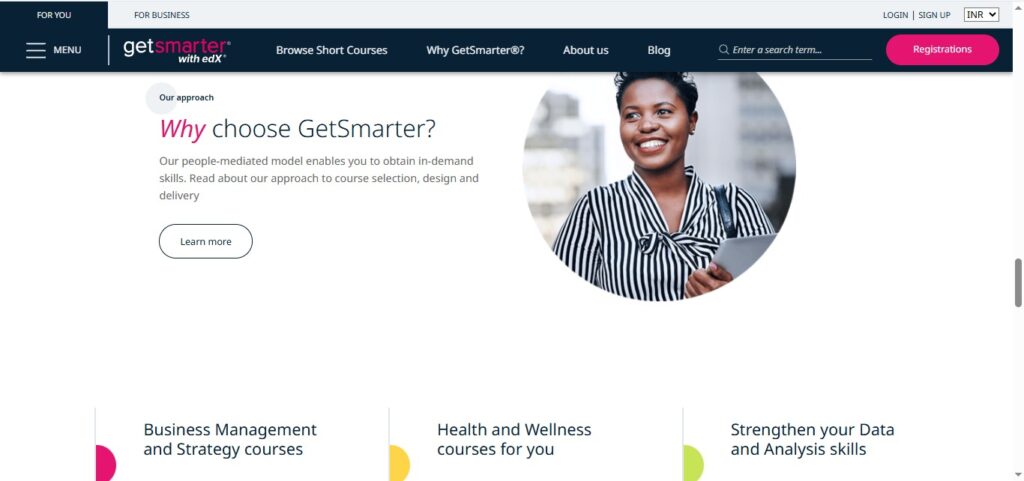
GetSmarter Pros and Cons
Pros
- Certificate from the university itself: the digital certificate is issued by MIT, Oxford, Cambridge or whichever university runs the course, not by GetSmarter.
- Built for people with jobs: most courses need 4 to 12 hours a week, and you choose when to study within each week.
- You are not on your own: courses run in cohorts with a facilitation team of subject experts and enrolment specialists for admin questions.
- A real refund window: on courses of 4 weeks or more you can cancel or postpone up to 21 days after the start date.
- Spread the cost: longer courses can be paid in 2 to 4 instalments.
Cons
- Expensive per hour: the courses we priced work out at roughly $24 to $107 per study hour; you pay heavily for the university name.
- Not accredited: courses are non-credit-bearing unless the course page says otherwise, so they will not count toward a degree.
- Fixed start dates: you cannot start any day you like; you wait for the next cohort.
- No public price list: you only see the fee on each course page.
Is GetSmarter Legit?
Yes, GetSmarter is a legitimate platform. It has been operating for over a decade and has partnerships with globally recognized universities. The courses are designed to provide practical skills relevant to today’s job market.
GetSmarter was founded in Cape Town in 2008 and bought by the US education company 2U in 2017 for $103 million. 2U went through Chapter 11 bankruptcy in July 2024, cut more than $450 million of debt and came out as a private company. It refinanced in April 2026. GetSmarter continued operating as a 2U subsidiary, and its courses still run with the same university partners. 2U also owns edX, and edX’s Executive Education catalogue lists programmes from many of the same universities. It’s worth checking whether a course you want appears on both sites before you enrol.
Are GetSmarter Courses Worth It?
Worth it if: your employer is paying, you want a named university on your CV for a specific move (for example into AI strategy or a leadership role), or you learn better with deadlines and a cohort than alone.
Not worth it if: you are paying yourself and mainly want the knowledge. Self-paced platforms teach similar material for a fraction of the price. It is also the wrong choice if you need an accredited qualification.
Before you pay: check the weekly hours against your schedule, confirm the start date, and note the refund deadline (21 days after the start on courses of 4 weeks or more).
GetSmarter vs Coursera and edX
| GetSmarter | Coursera Plus | edX Executive Education | |
|---|---|---|---|
| Pricing | $1,139–$3,850 per course (in our sample) | $59/month or $399/year | Per programme |
| Format | Cohort-based, fixed start dates | Self-paced | 6 to 20+ week programmes |
| Certificate | Issued by the partner university | Course or professional certificates | Executive Education certificate |
| Best for | A university-branded credential in one focused area | Broad learning on a budget | Comparing the same kind of university programmes |
Coursera Plus gives access to more than 10,000 courses and professional certificates for $399 a year, less than half the price of GetSmarter’s cheapest course we checked. What you give up is the cohort, the facilitation team and the university-issued certificate from a single focused programme. Degree programmes and MasterTrack certificates aren’t included in Coursera Plus.
For data skills specifically, a self-paced platform like 365 Data Science is a lower-cost way to build practical skills before paying for a university-branded course.
Can my employer pay for a GetSmarter course?
GetSmarter accepts card payments, electronic transfer and direct deposit, and lets you split the fee into 2 to 4 instalments, which can fit how employers reimburse training. If your employer funds training, check its policy before you enrol, since refunds are only possible within the windows above.
GetSmarter FAQs
Are GetSmarter courses accredited?
No. GetSmarter courses are non-credit-bearing unless the course page says otherwise, so they do not count toward a degree. Some courses do count toward professional development hours (CPD, CEU or PDU), and the course page lists this.
Can I add a GetSmarter certificate to my resume?
Yes. You receive a digital certificate from the university that runs the course (courses under 4 weeks give a digital badge instead). Add it to LinkedIn under Licenses and Certifications and describe it accurately, for example as an online short course from that university, not as a degree.
Can I postpone a GetSmarter course?
On courses of 4 weeks or more, you can postpone once within 21 calendar days of the start date. A second postponement means you lose refund eligibility, and GetSmarter does not guarantee that a future intake will run. Courses of 3 weeks or less cannot be postponed, only cancelled.
Do GetSmarter courses have prerequisites?
Most courses have no formal prerequisites. Check the course page for any recommended background before you enrol.
How do I contact GetSmarter?
Use the contact options on getsmarter.com. Enrolment specialists handle admin and payment questions, and during a course the facilitation team answers content questions on the Online Campus.
Our Verdict
GetSmarter is a legitimate way to earn a certificate from a well-known university in 6 to 10 weeks without leaving your job. The structure, deadlines and support are the real product; the price reflects the university name more than the content. If your employer pays, or a specific university credential will help your next move, it is a good choice. If you are paying yourself and just want the skill, start with a cheaper self-paced course, and come back to GetSmarter when the certificate itself matters.

Related Reviews
More from Learning & Lifestyle